Human greenhouse-gas emissions are warming the climate system and driving widespread changes in temperature, oceans, ice, rainfall and extremes.[5]
Key takeaways
- The IPCC concludes that human activities, principally greenhouse-gas emissions, have unequivocally caused global warming.
- Warming affects the atmosphere, ocean, cryosphere and biosphere and is already influencing climate extremes in every region.
- Future impacts depend strongly on cumulative emissions, adaptation and the speed of greenhouse-gas reductions.
In this article
- Why the climate is warming
- How scientists know the cause
- Observed changes are broader than temperature
- Impacts depend on exposure and vulnerability
- Mitigation and cumulative emissions
- What uncertainty means in climate science
- Climate change connects physical, chemical and ecological systems
- Recent observations fit the long-term warming trend
- Risk grows with additional warming
Why the climate is warming
Earth’s climate is influenced by incoming solar energy, the reflectivity of the planet and the composition of the atmosphere. Greenhouse gases absorb and re-emit infrared radiation, reducing the rate at which heat escapes to space. This natural greenhouse effect makes Earth habitable, but increasing greenhouse-gas concentrations strengthens it.
Human activities have raised concentrations of carbon dioxide, methane and other greenhouse gases, mainly through fossil-fuel use, industry, agriculture and land-use change. The Intergovernmental Panel on Climate Change concluded in its Sixth Assessment Report that human influence has unequivocally warmed the atmosphere, ocean and land.[1]
How scientists know the cause
Attribution does not rely on a single thermometer record. Scientists compare observations with physical theory, laboratory measurements, satellite data, paleoclimate evidence and model simulations. The geographical and vertical patterns of observed change also provide fingerprints that distinguish greenhouse forcing from alternatives such as changes in solar output.
Natural factors still affect climate from year to year and decade to decade. Volcanic eruptions can temporarily cool the surface, while ocean cycles redistribute heat. These influences are included in climate analysis, but they do not explain the long-term global warming observed since the industrial era.
Observed changes are broader than temperature

Global average surface temperature is one indicator, not the whole story. Oceans have absorbed much of the excess heat. Glaciers and ice sheets have lost mass, sea level has risen, and many ecosystems are responding to shifting temperature and precipitation patterns.[4]
Human-caused climate change is also affecting the frequency or intensity of some extremes. The strength of evidence differs by event type and region, but heat extremes show especially clear links to warming. Heavy precipitation has intensified in many places because warmer air can hold more water vapor.
Impacts depend on exposure and vulnerability
A climate hazard becomes a societal disaster through its interaction with people, infrastructure and ecosystems. The same heat wave can have very different consequences depending on housing, health, power systems, urban design and access to cooling. Coastal risk depends not only on sea-level rise but also on land subsidence, storm exposure and protective infrastructure.
This is why adaptation is a major part of climate policy. Heat-health plans, water management, resilient agriculture, ecosystem protection and redesigned infrastructure can reduce harm, although adaptation has practical and physical limits as warming increases.
Mitigation and cumulative emissions
Carbon dioxide persists in the climate system for a long time, so warming is closely related to cumulative CO2 emissions. Reaching net-zero carbon dioxide emissions is therefore central to stopping additional long-term CO2-driven warming. Reducing methane can also slow near-term warming because methane is powerful but shorter-lived.
Energy systems, transport, buildings, industry, agriculture and land management all offer mitigation options. The appropriate mix varies among countries and sectors. Climate science can estimate consequences and trade-offs, while political decisions determine how costs, benefits and responsibilities are distributed.
What uncertainty means in climate science
Uncertainty does not mean scientists have no knowledge. It describes the range and confidence associated with estimates. Some findings, including the dominant human cause of recent warming, are supported with very high confidence. Other questions, such as local rainfall changes decades from now, can have wider ranges.
Good climate communication should therefore separate well-established conclusions from projections that depend on future emissions and model uncertainty. The purpose is not to remove uncertainty but to make it explicit enough for informed decisions.
Climate change connects physical, chemical and ecological systems
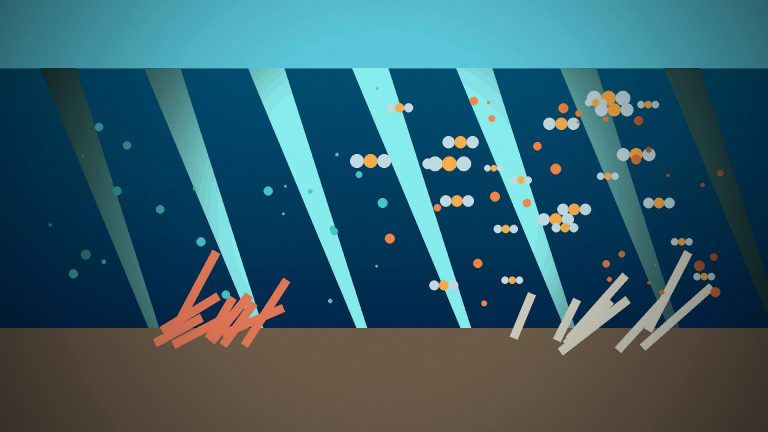
Climate impacts often interact rather than occurring in isolation. Ocean warming contributes to marine heatwaves and coral bleaching, while dissolved carbon dioxide changes seawater chemistry through ocean acidification. On land, heat, drought, fire weather, changing snowpack and shifting growing seasons can combine to affect water supplies, agriculture and ecosystems.
Attribution science can increasingly estimate how human-caused warming changes the probability or intensity of particular classes of extreme event, but not every event has the same level of evidence. Careful interpretation therefore distinguishes global trends from local outcomes and separates observed changes from future projections. This is also why a single cold spell or unusually wet season does not by itself confirm or contradict a long-term climate trend.
Recent observations fit the long-term warming trend
Annual rankings move up and down as natural variability interacts with the long-term trend, but the recent record remains exceptional. The World Meteorological Organization reports that 2015–2025 were the eleven warmest years in the observational record and that 2025 was the second- or third-warmest year, about 1.43°C above the 1850–1900 average. WMO also reported record-high ocean heat content in 2025. These annual indicators do not replace multi-decadal analysis, but they are consistent with the continuing accumulation of heat expected from elevated greenhouse-gas concentrations.[5]
Natural variability still affects individual years and regions. El Niño and La Niña redistribute heat between the ocean and atmosphere, and volcanic eruptions can temporarily cool the surface. Climate attribution therefore uses long records, physical fingerprints and ensembles of model simulations rather than treating a single hot year, cold spell or storm as proof of a long-term trend.
Risk grows with additional warming
Climate impacts depend on the physical hazard, the number of people and ecosystems exposed to it, and their vulnerability. The same increase in extreme heat can have very different consequences in places with reliable electricity, cooling and health care than in places without them. Adaptation can reduce many risks, but some limits become harder to avoid as warming increases.[2]
Mitigation addresses the driver by reducing net greenhouse-gas emissions; adaptation addresses consequences that are already occurring or cannot be fully avoided. The two are complementary. Because carbon dioxide accumulates and persists in the climate system, the total amount emitted over time is closely related to long-term warming. Decisions made in the near term therefore influence both the peak level of warming and the scale of future adaptation required.[3]