Vaccines expose the immune system to antigens in a controlled way so that protective B-cell and T-cell responses can develop before a dangerous encounter with a pathogen.
Key takeaways
- Vaccines present antigens or genetic instructions for antigens without requiring the disease itself to provide the learning experience.
- Adaptive immune responses can produce antibodies, T-cell responses and memory cells that react faster during later exposure.
- Protection can vary by vaccine, pathogen, age and immune status, and some vaccines require multiple doses or boosters.
In this article
- Vaccination uses immune memory
- What counts as an antigen
- Adjuvants and innate signals help start the response
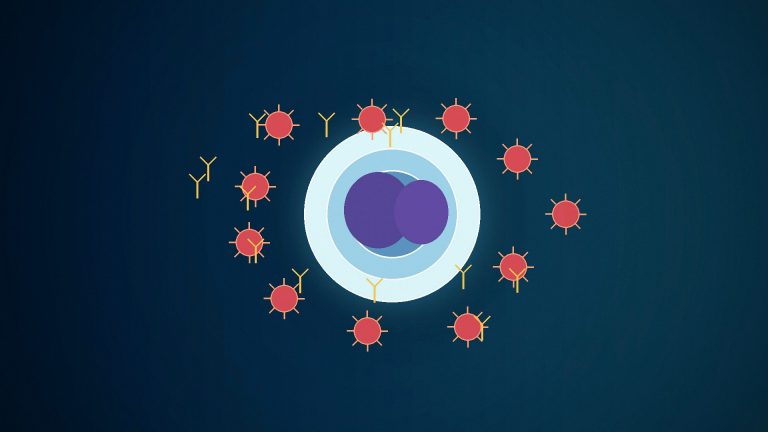
- Antibodies and B cells
- T cells and cellular immunity
- Different vaccine platforms present antigens in different ways
- Why immune memory can fade or need updating
- Effectiveness and safety are measured after approval as well as before it
- Protection can mean different outcomes
- Population effects depend on the pathogen and the vaccine
- Immune measurements do not all predict protection equally
Vaccination uses immune memory

The adaptive immune system can remember previous encounters. Vaccination takes advantage of this property by exposing the immune system to a harmless or controlled representation of a pathogen before natural infection occurs.
The goal is not always to prevent every infection. Depending on the vaccine and pathogen, protection may be strongest against severe disease, complications, transmission, infection or some combination of these outcomes.
What counts as an antigen
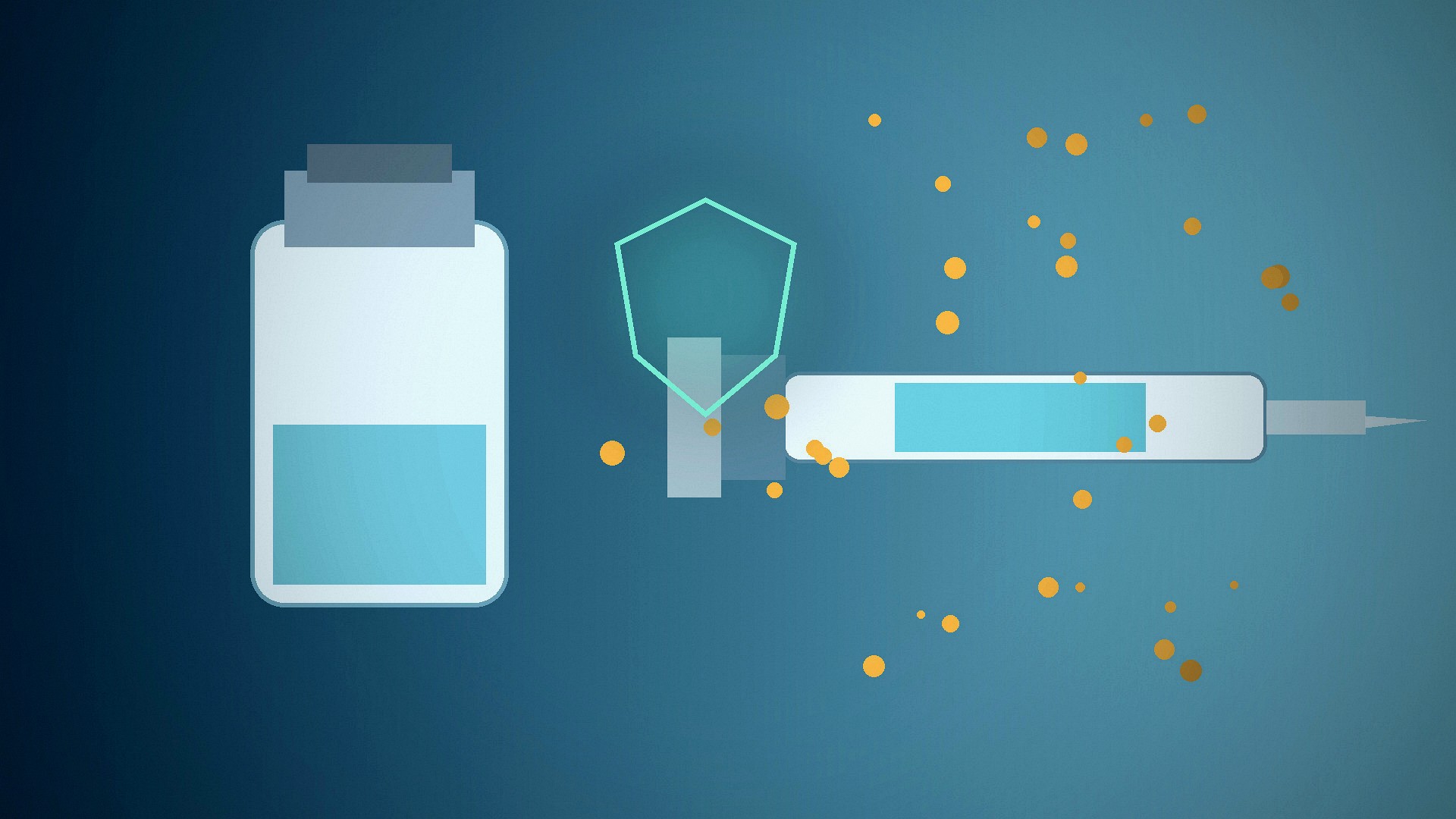
An antigen is a molecular structure recognized by the adaptive immune system. Vaccines can deliver antigens in different forms: weakened or inactivated organisms, purified proteins or polysaccharides, harmless viral vectors, or genetic instructions such as mRNA that allow cells to make an antigen temporarily.
These platforms differ in manufacturing and immune stimulation, but all aim to present information that lets B and T lymphocytes build specific responses.
Adjuvants and innate signals help start the response
Adaptive immunity does not develop in isolation. Antigen-presenting cells respond to molecular danger or activation signals and then provide the co-stimulation needed to activate lymphocytes effectively. Some vaccines include adjuvants that strengthen innate signaling and antigen presentation; the mechanisms differ among formulations. The exact formulation depends on the vaccine platform and the kind of immunity required. Vaccination is therefore not simply the injection of an antigen; it is a controlled way of presenting antigen in an immunological context that can generate memory.[4]
Antibodies and B cells
When appropriately activated, B cells can differentiate into plasma cells that secrete antibodies. Antibodies may block a pathogen from entering cells, neutralize toxins or mark particles for destruction by other immune mechanisms.
Some activated B cells enter specialized reactions in lymphoid tissues where antibody affinity can improve. Long-lived plasma cells and memory B cells can persist after the initial response.
T cells and cellular immunity
Helper T cells support B-cell maturation and coordinate other immune functions. Cytotoxic T cells can identify and destroy infected cells that display relevant antigen fragments. The strength and type of T-cell response vary among vaccine platforms because antigens can be encountered through different cellular pathways.[3]
T-cell immunity is particularly important when protection depends on recognizing infected cells rather than neutralizing free pathogen particles alone. Antibodies and T cells therefore contribute different but overlapping layers of adaptive protection.[3]
Different vaccine platforms present antigens in different ways
Vaccines do not all use the same technology. Live attenuated vaccines use a weakened organism that can reproduce to a limited extent. Inactivated vaccines use killed organisms. Protein-subunit and conjugate vaccines present selected components. Toxoid vaccines target harmful bacterial toxins. Viral-vector vaccines use a modified carrier virus to deliver genetic instructions, while mRNA vaccines deliver messenger RNA that cells briefly use to make an antigenic protein.[1]
The platform affects how the antigen is encountered, how long it is present and which arms of immunity are most strongly activated. It also affects storage, manufacturing and suitability for people with particular medical conditions. No single platform is universally best; vaccines are designed around the biology of the pathogen and the type of protection required.
Why immune memory can fade or need updating
After vaccination, many activated lymphocytes die as the immediate response contracts, while memory B cells, memory T cells and in some cases long-lived antibody-producing plasma cells remain. The strength and duration of protection differ among vaccines and pathogens. Antibody concentrations can decline with time, pathogens can change antigenically, and some infections require a higher level of circulating antibody to block infection than to prevent severe disease.[2]
Boosters can raise antibody levels and expand or refine memory-cell populations. Updated vaccine formulations may be used when an evolving pathogen changes enough that earlier immunity recognizes it less efficiently. The need for a booster is therefore an evidence question based on immune persistence, disease risk and real-world effectiveness, not a sign that immune memory never formed.
Effectiveness and safety are measured after approval as well as before it
Clinical trials estimate how well a vaccine prevents specified outcomes under controlled conditions and collect safety data before authorization or approval. After deployment, surveillance systems can detect uncommon adverse events that would be difficult to identify in smaller trials and can measure effectiveness in different age groups and risk settings. Regulators and public-health agencies update recommendations as evidence changes.[3][5]
This article explains general immunology and is not a personal vaccination recommendation. Individual decisions can depend on age, pregnancy, immune status, allergies, previous doses, local disease patterns and current national guidance.
Protection can mean different outcomes
A vaccine does not have to prevent every infection to provide important protection. Some vaccines produce immunity that strongly blocks infection and transmission; others are more reliable at preventing symptomatic or severe disease than at preventing short-lived infection. Effectiveness estimates therefore need an outcome attached to them—such as infection, hospitalization or death—and can change with age, time since vaccination and pathogen evolution. Comparing percentages without checking the measured outcome can be misleading.
Population effects depend on the pathogen and the vaccine
When vaccination lowers a person’s probability of becoming infected or transmitting an infection, high coverage can also reduce opportunities for the pathogen to spread through a community. The size of that indirect effect depends on how contagious the pathogen is, how strongly the vaccine reduces infection or transmission, how immunity changes over time and how people mix. It should not be assumed to be identical for every vaccine. Direct protection against severe disease can remain valuable even when prevention of all infection is incomplete.
Immune measurements do not all predict protection equally
Researchers often measure antibody concentrations, neutralizing activity or cellular responses after vaccination, but a laboratory measurement is not automatically a complete measure of protection. For some vaccines, a particular immune marker is a useful correlate of protection; for others, protection depends on several components of immunity and cannot be summarized by one threshold.[3]
A decline in a measured antibody level therefore does not necessarily mean that all protection has disappeared. Memory B cells, T cells, antibody quality and the speed of recall responses can also contribute, particularly to protection against severe disease. Interpreting waning immunity requires linking laboratory measurements to clinical outcomes rather than reading one immune marker in isolation.[3]