The immune system combines fast pattern recognition with highly specific adaptive responses to detect and control infectious microbes.
Key takeaways
- Innate immunity recognizes broad molecular patterns associated with microbes or tissue damage and responds quickly.
- Adaptive immunity uses B and T lymphocytes with highly specific receptors and can form long-lasting immune memory.
- Effective defense depends on communication among barriers, immune cells, antibodies, lymphoid tissues and signaling molecules.
In this article
- Defense starts before a microbe enters
- Innate immunity recognizes patterns
- Antigen presentation connects innate and adaptive immunity
- B cells, antibodies and specific recognition
- T cells coordinate and kill
- Immune memory
- Recognition must be balanced with immune tolerance
- Complement and inflammation amplify early defense
- Recognition can fail in more than one direction
- Mucosal surfaces have their own immune environment
Defense starts before a microbe enters
The immune system is not a single organ. It is a distributed network of physical barriers, cells, molecules and tissues. Skin and mucosal surfaces create the first line of defense. Mucus, antimicrobial molecules, cilia, normal microbial communities and tightly connected epithelial cells all make it harder for pathogens to establish an infection.[4]
When those barriers are crossed, immune cells detect molecular evidence of danger. This response has to balance two competing goals: react strongly enough to control infection, but avoid unnecessary damage to healthy tissue.
Innate immunity recognizes patterns
Cells of the innate immune system carry receptors that recognize recurring molecular patterns. Some patterns are common to classes of microbes, while others signal cell injury. This allows the body to respond rapidly even if it has never encountered a particular pathogen before.
Macrophages, neutrophils, dendritic cells and other innate cells can engulf microbes, release antimicrobial substances and produce signaling molecules called cytokines. These signals recruit additional cells, alter nearby tissues and help shape the later adaptive response.
Antigen presentation connects innate and adaptive immunity
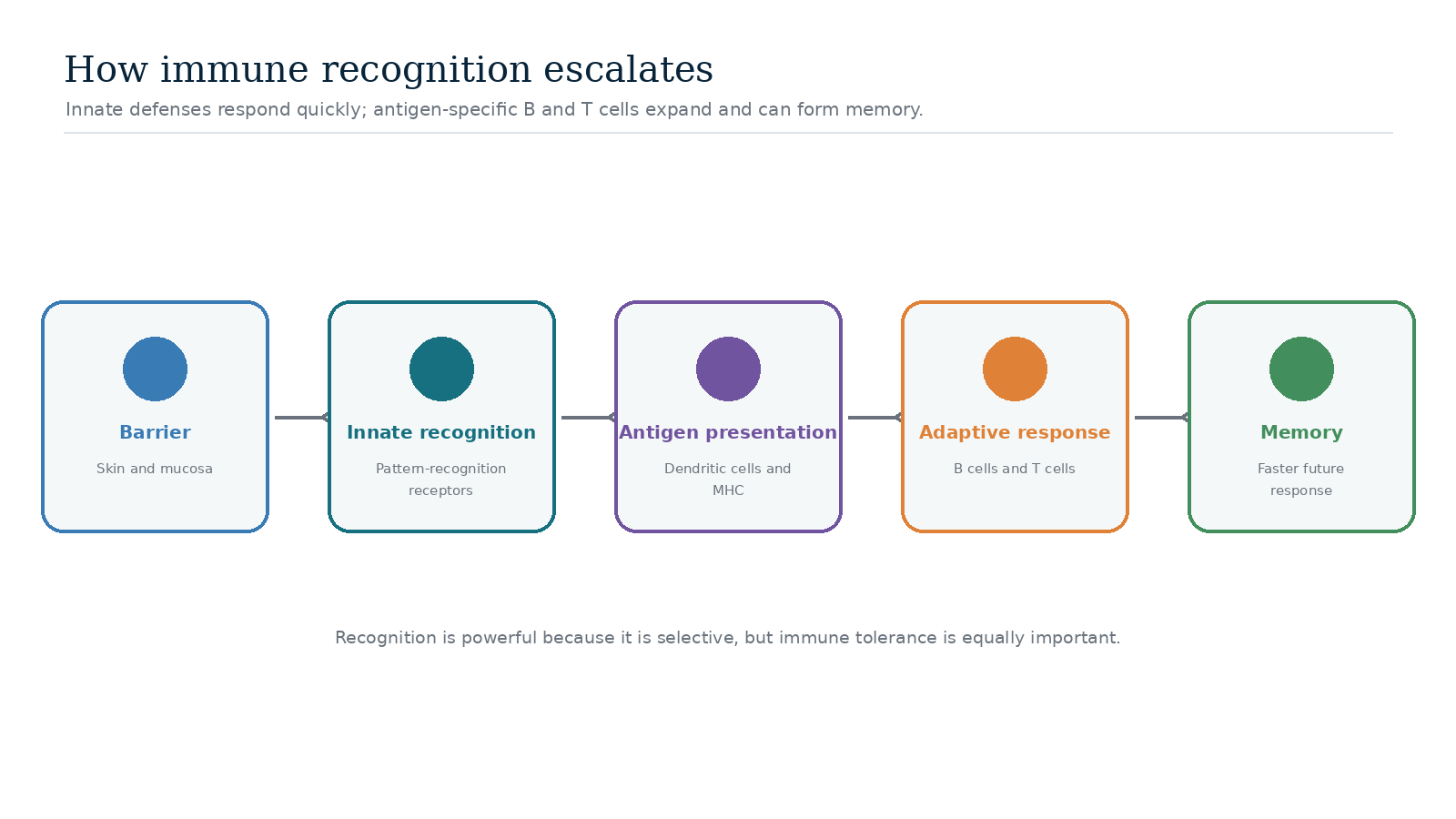
Dendritic cells are particularly important messengers. After encountering microbial material in tissues, they can travel to lymph nodes and display fragments of proteins on major histocompatibility complex molecules. T cells inspect these displayed fragments using their antigen receptors.
Antigen presentation helps ensure that adaptive responses are triggered in the right context. It also allows the immune system to distinguish different kinds of threats and coordinate the types of T-cell activity most useful for controlling them.
B cells, antibodies and specific recognition
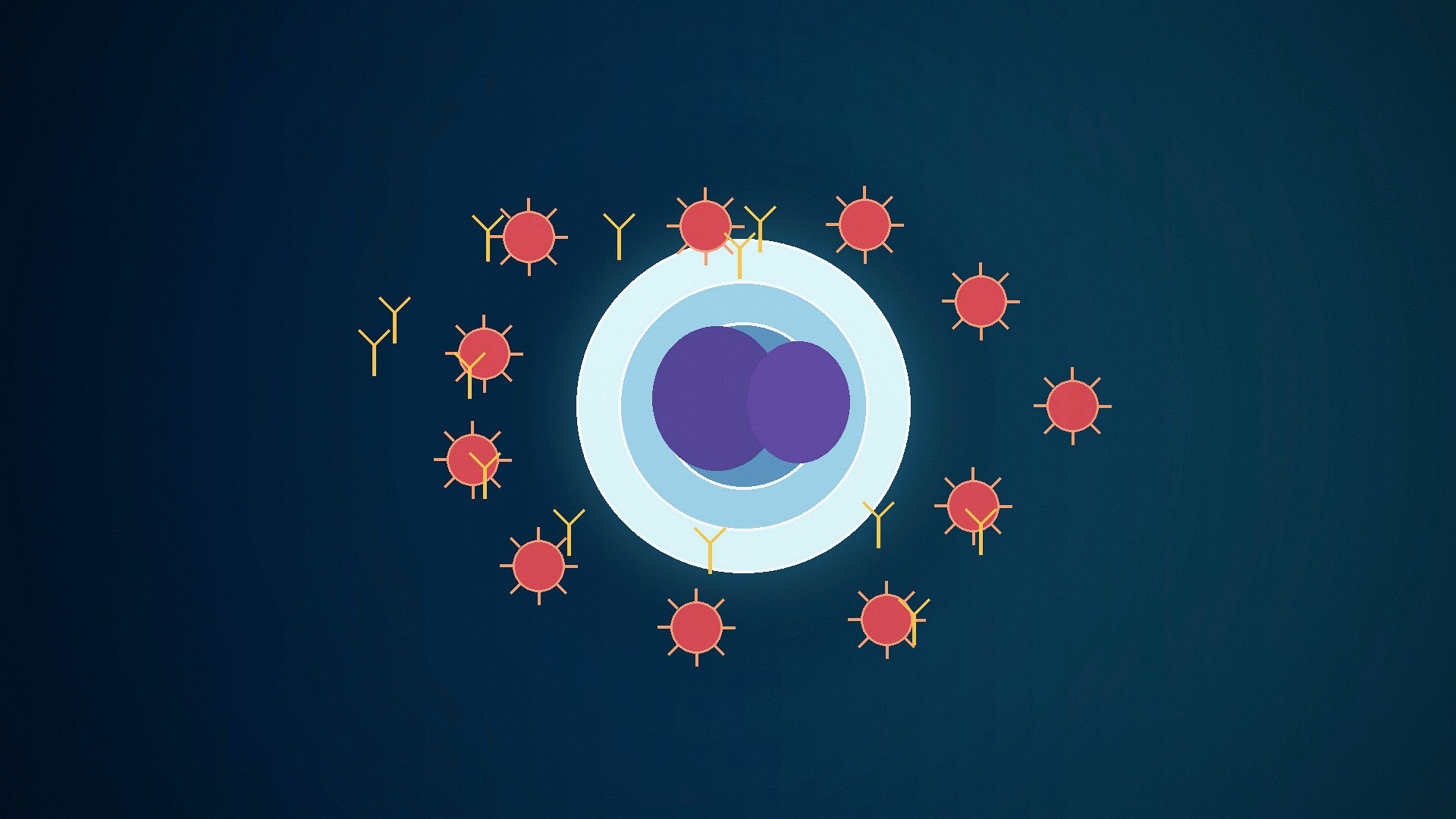
B cells each carry receptors with a particular molecular specificity. When a B cell is activated, it can proliferate and differentiate into plasma cells that secrete antibodies. Antibodies bind specific molecular structures and can neutralize toxins or viruses, block attachment to host cells, and mark microbes for destruction by other immune mechanisms.
The enormous diversity of B-cell receptors is created during lymphocyte development. The body therefore maintains a large repertoire of cells capable of recognizing an extraordinary range of potential antigens.
T cells coordinate and kill
Different T-cell populations perform different jobs. Helper T cells coordinate immune activity by producing signals and supporting B cells, macrophages and other cells. Cytotoxic T cells can recognize infected or abnormal host cells and trigger their destruction, limiting sites where some pathogens replicate.
Regulatory mechanisms are equally important. Immune responses need brakes as well as accelerators. If immune activity is misdirected against harmless substances or the body’s own tissues, allergy or autoimmune disease can result.
Immune memory
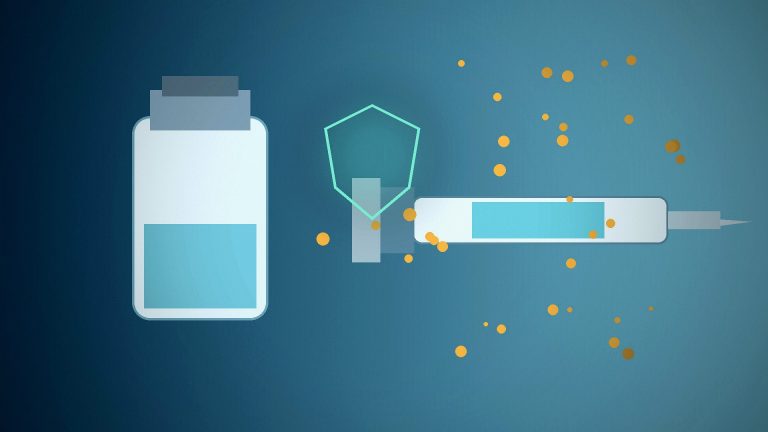
After many infections or vaccinations, a fraction of activated B and T cells persists as memory cells. On later exposure to the same antigen, these cells can respond more rapidly and effectively. Memory is one of the defining features of adaptive immunity and is the biological principle exploited by vaccination.
Immune protection is not identical for every pathogen or person. The location of infection, age, prior exposures, genetics, immune status and characteristics of the microbe all influence the response. This article is general educational information and is not a substitute for medical advice.
Recognition must be balanced with immune tolerance
An effective immune system must respond to dangerous microbes while limiting unnecessary damage to the body’s own tissues. Multiple tolerance mechanisms reduce the survival or activation of strongly self-reactive lymphocytes, and regulatory signals help restrain immune responses after a threat has been controlled. When these controls fail, immune activity can contribute to autoimmune or inflammatory disease.
Recognition also varies with the pathogen and the route of exposure. Mucosal surfaces, blood and tissues contain different mixtures of immune cells and signaling molecules. Vaccination uses these same adaptive mechanisms to establish memory before a dangerous natural encounter. See how vaccines train the immune system for a focused explanation of that process.
Complement and inflammation amplify early defense
Innate immunity is not limited to cells. The complement system is a network of blood proteins that can be activated by microbial surfaces or by antibodies. Complement fragments can coat microbes, recruit inflammatory cells and, in some cases, assemble membrane-attacking complexes. These reactions help turn local recognition into a broader response, but they are tightly regulated because uncontrolled complement activity can damage host tissue.[1][5]
Inflammation has a similar dual role. Chemical signals produced after infection increase blood flow and change vessel permeability so immune cells and proteins can reach affected tissue. Fever, swelling and soreness are therefore consequences of a coordinated defense program rather than direct measures of how dangerous a pathogen is. The response has to be strong enough to control infection but limited enough to preserve the tissue being defended.
Recognition can fail in more than one direction
An immune system that responds too weakly can allow infections to spread. A system that responds inappropriately can cause disease of its own. Allergies involve immune responses to ordinarily harmless substances. Autoimmune diseases arise when tolerance to self is lost and immune cells attack the body’s own molecules or tissues. Chronic inflammatory disorders can persist even when no active infection is present.[2]
This balance explains why “boosting the immune system” is not a useful scientific goal in itself. Effective immunity depends on timing, specificity, regulation and memory. Vaccination works by training antigen-specific adaptive responses without requiring the full risks of natural infection, while many medical treatments deliberately suppress particular immune pathways when an overactive response is causing harm.[3]
Mucosal surfaces have their own immune environment
Many pathogens first encounter the body at the airways, intestine or other mucosal surfaces. These tissues combine mucus, antimicrobial molecules, resident immune cells and specialized antibodies such as secretory IgA. The goal is not to create maximum inflammation at every contact. Mucosal immunity often has to distinguish dangerous microbes from food, harmless environmental material and the normal microbiota. That local balance helps explain why immune responses can differ between the bloodstream, skin, lungs and intestine even when many of the same immune-cell families are involved.